
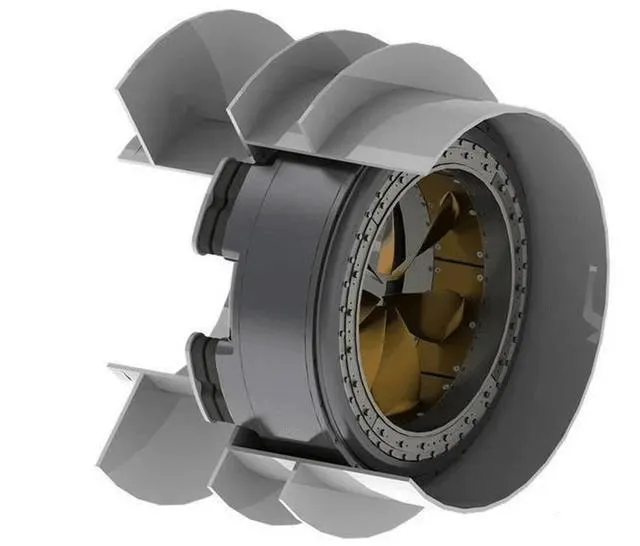
A water jet pump is a propulsion device that sucks in water through a high-speed rotating impeller and sprays it out under pressure. The reverse propulsion force it generates is used to propel the ship forward. Compared with traditional propeller propulsion, water jet pumps are widely used in high-speed ships, engineering ships, yachts, military ships, and jet skis due to their low noise, strong controllability, high anti-cavitation ability, and adaptability to shallow waters. It is highly safe, not easily entangled by debris, supports precise control and energy-saving design, and meets the diverse needs of modern water transportation and entertainment. In the future, innovations in intelligent control and material optimization will further improve its efficiency and environmental performance.
1. Working principle of water jet propulsion pump
- Water inlet process: The water jet propulsion pump inhales water through the water inlet. A filter device or grille is usually used to prevent foreign matter from entering the pump body and protect the pump impeller and related components.
- Pressurization process: After the water flow enters the pump body, it is accelerated by the centrifugal force generated by the high-speed rotation of the impeller. The impeller enhances the energy of the water flow and converts the kinetic energy of the water flow into pressure through the diversion device, causing it to form a high-speed water flow at the injection port.
- Injection process: high-speed water is ejected through the nozzle to form a powerful water column. According to Newton’s third law, the jet of water will produce a reaction force, pushing the pump body and ship forward.
2. Advantages of water jet propulsion pump
- Low noise and low vibration: The structural characteristics of the water jet propulsion pump ensure low noise during operation, making it ideal for applications requiring high quietness. Additionally, the absence of exposed propellers minimizes vibration at high speeds, making it suitable for low-noise vessels such as yachts and military ships.
- High maneuverability and flexibility: Water jet propulsion pumps allow for precise control by directing the jet’s water flow, enabling rapid steering and stopping. Their ability to achieve a “zero turning radius” makes them ideal for vessels requiring frequent maneuvering, such as high-speed patrol and rescue boats, particularly in narrow waters or ports.
- Prevention of debris entanglement: Unlike traditional propellers, the impellers and nozzles of water jet propulsion pumps are housed inside the hull, effectively avoiding entanglement with aquatic plants, garbage, or debris. This feature is especially beneficial in shallow or debris-laden waters, enhancing reliability and longevity.
- High safety: With propulsion components enclosed within the hull, the risk associated with exposed propellers is significantly reduced, ensuring safer operations for crew and swimmers, particularly in recreational and rescue scenarios.
- Strong anti-cavitation ability: Water jet propulsion pumps are designed to minimize cavitation, a phenomenon where high-speed rotating propellers create bubbles underwater, reducing efficiency. Optimized impeller and flow channel designs improve propulsion efficiency and energy utilization, especially at high speeds.
- Adaptability to shallow and complex waters: The internal placement of the nozzle and impeller allows vessels to navigate shallow waters with reduced risk of bottom contact or obstacle interference. This makes them suitable for applications like rescue and engineering boats operating in shallow or challenging water conditions.
3. Application areas of water jet propulsion pumps
- High-speed ships: such as high-speed passenger ferries, taxiing boats, missile speedboats, etc., use the high efficiency and maneuverability advantages of water-jet propulsion pumps to achieve high-speed navigation.
- Engineering ships: Such as dredgers, salvage ships, and ships that are frequently operated because of water jet propulsion pumps, the risk of propeller entanglement is reduced.
- Yachts and leisure boats: Waterjet propulsion pumps produce low noise and low vibration, providing a more comfortable experience for passengers.
- Military ships: The low-noise characteristics of waterjet propulsion pumps are particularly important in military ships and contribute to concealment requirements.
- Amphibious vehicles: The application of water-jet propulsion pumps enables amphibious vehicles to travel quickly on water.
4. Development Trend of Water Jet Propulsion Pumps
- Intelligent control: The introduction of digital control technology enables precise water flow direction management, enhancing control flexibility and operational efficiency.
- Environmentally friendly and energy-saving design: By incorporating advanced materials and optimized fluid mechanics designs, water resistance is reduced, resulting in improved propulsion efficiency and lower energy consumption.
- Composite material application: The use of lightweight, corrosion-resistant materials enhances durability in seawater environments and adaptability to complex operating conditions.

